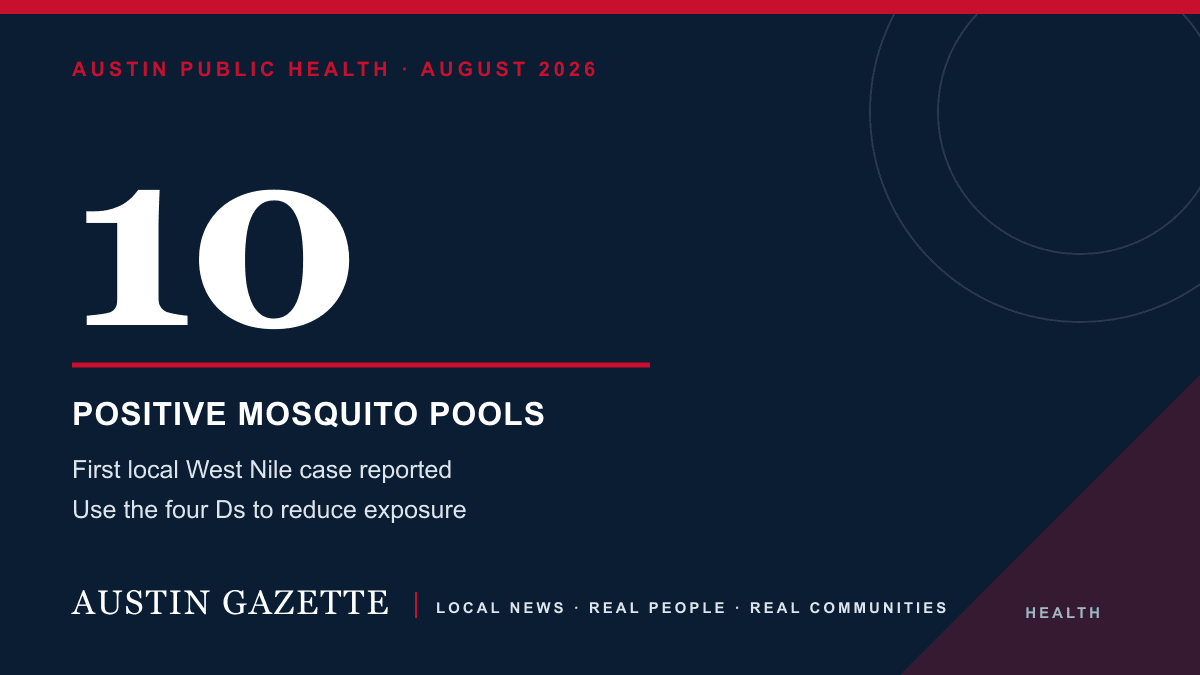
Austin Public Health has confirmed Travis County's first West Nile virus case of 2026, marking the start of human infections in the region as mosquito season persists into fall.
The positive case involves a Travis County resident who sought medical care after developing symptoms. In related surveillance, 10 mosquito pools have tested positive for the virus across the county this year.
Health officials emphasized that mosquito activity remains a concern despite the seasonal shift. Austin-Travis County Health Authority Dr. Desmar Walkes noted that several months of mosquito season remain and residents should maintain protective measures while spending time outdoors.
West Nile virus spreads primarily through infected mosquito bites. It is not transmitted through coughing, sneezing, or direct contact with people or animals.
Who Is Most at Risk
About 20 percent of infected people develop noticeable symptoms including headache, body aches, joint pain, vomiting, diarrhea or rash. Some cases progress to severe illness affecting the central nervous system, potentially causing seizures or coma.
Certain populations face greater risk of serious complications. Adults over 60 and people with medical conditions such as cancer, diabetes, hypertension or kidney disease are more vulnerable to severe disease. Immunocompromised individuals and organ transplant recipients also face heightened risk of developing severe infections.
Prevention Measures
Health officials recommend several protective steps for residents across the Austin area and surrounding communities. These include wearing appropriate clothing, using insect repellent containing DEET, and eliminating standing water around homes where mosquitoes breed.
2025 Context
Last year, Travis County experienced more extensive virus activity. In 2025, 41 mosquito pools tested positive for West Nile virus, and five cases were confirmed in Austin-Travis County residents.
The first human case this year comes as surveillance indicates ongoing virus circulation in the local mosquito population. Health officials continue monitoring mosquito activity and tracking cases to assess community transmission levels.
Source: This report is based on information published by Austin Public Health.