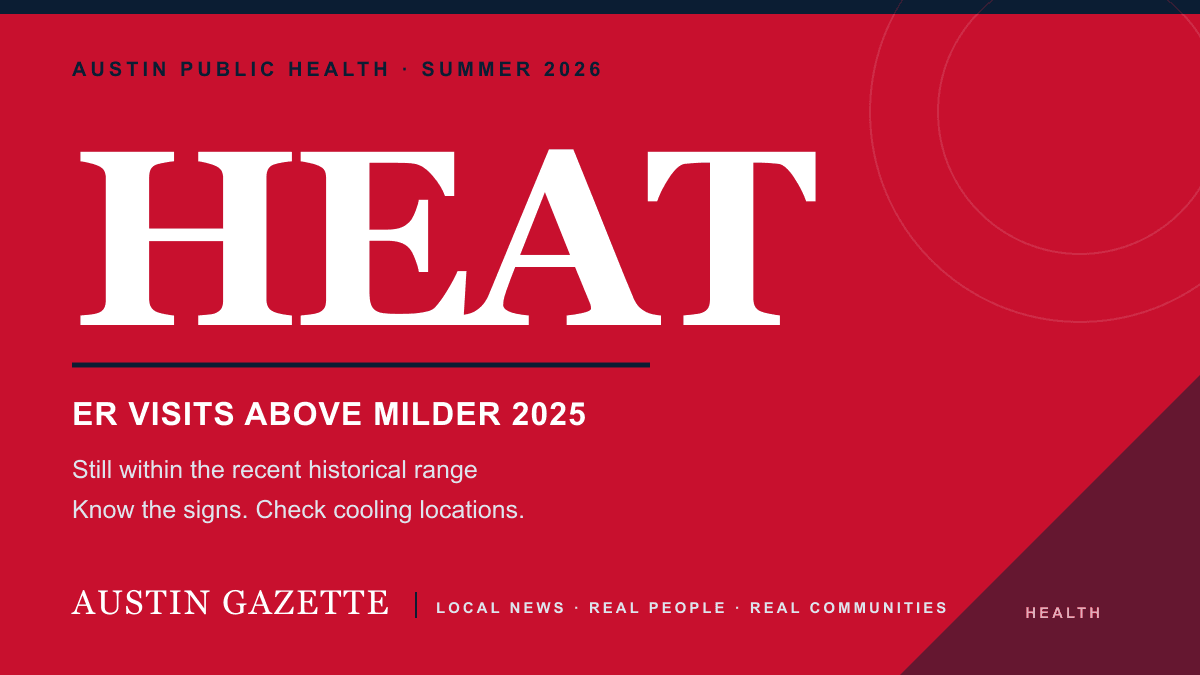
Heat-related emergency-room visits across the Austin metro are running above levels recorded during the milder summer of 2025, according to a new Austin Public Health dashboard.
The health department said the 2026 figures remain within the range experienced by Austin and Travis County during other recent years, rather than describing the increase as a record.
The Heat-Related Illness Morbidity and Mortality Dashboard tracks emergency visits from May 1 through October 31 and places them alongside the maximum temperature and heat index for each day.
Cases included in the data can involve heat stroke, heat exposure, heat exhaustion, heat cramps, fainting and dehydration. The dashboard also breaks information down by the day and time of visits and by patient demographics, with historical figures available from 2021.
That longer historical view matters because comparing one summer with one unusually mild year can make a change appear more exceptional than it is. Austin Public Health’s description indicates that the rise from 2025 is real, while also placing it inside the range recorded during other recent summers.
The dashboard can help residents understand when heat-related illness is being recorded, but it does not predict an individual person’s risk. Temperature, activity, health conditions and access to cooling can all affect whether someone becomes unwell.
Signs of heat-related illness
Austin Public Health lists possible warning signs including:
- muscle cramping;
- unusually heavy sweating;
- shortness of breath;
- dizziness or headaches;
- weakness; and
- nausea.
The department advises anyone experiencing symptoms to seek medical care. Infants, children, older adults, outdoor workers, athletes and people with chronic medical conditions may face a higher risk.
People should not wait for every listed symptom to appear before taking a possible heat illness seriously. The health department’s guidance is designed to support awareness, not to provide an online diagnosis.
Where Austin residents can cool down
Austin Public Library and Austin Parks facilities can operate as cooling centers during their normal opening hours. Travis County community centers are also available during normal hours.
Opening times and availability can change, so residents should check the City of Austin’s current cooling-center map or contact the relevant facility before traveling.
The dashboard is intended to give residents and public-health teams a clearer view of when and how extreme heat is affecting the area. It should not be used as a substitute for medical advice or emergency assistance.
Anyone facing an immediate medical emergency should call 911. Austin Public Health’s dashboard announcement and heat-safety guidance are available from the city.